LimaTours: Nearly 70 Years of Tourism Creating Positive and Sustainable Impact
With nearly seven decades of operations in Peru, LimaTours reaffirms its leadership in responsible tourism by obtaining the WORLDCOB-CSR Certification, an international recognition that validates its commitment to sustainability, ethics, and the development of the communities where it operates.
For the company, this certification represents far more than a seal—it is the consolidation of a philosophy that has guided its purpose since its beginnings: connecting people, inspiring travel, and generating lasting positive impact. Under international standards, LimaTours has strengthened its social, environmental, and governance practices, positioning itself as a benchmark for sustainable tourism in Peru and Latin America.
Its Corporate Social Responsibility strategy is structured around four key pillars. On the environmental front, the company promotes responsible resource management, carbon footprint reduction, and reforestation and conservation projects. In the social and community sphere, it fosters the development of host communities, women’s empowerment, and sustainable experiential tourism. From a labor perspective, LimaTours prioritizes employee well-being, equal opportunities, and continuous professional development. Finally, in ethics and governance, the company upholds strong policies on anti-corruption, human rights, child protection, and corporate transparency.
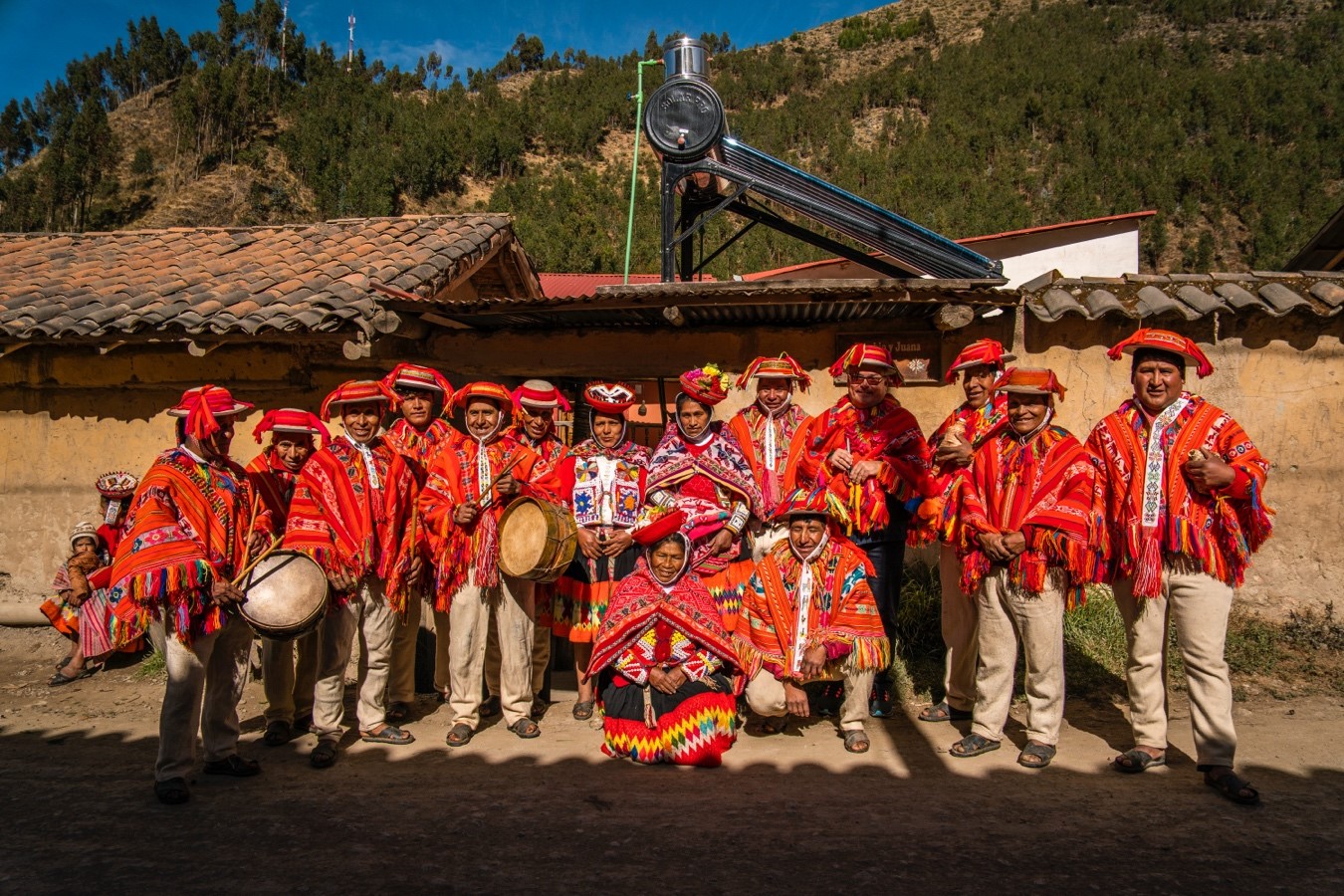
During 2024 and 2025, LimaTours implemented high-impact initiatives that reflect this commitment. Notable actions include the installation of 28 solar thermal systems in high-Andean communities, the reforestation of 3,000 polylepis trees in the Vilcanota mountain range, and participation in the “One Million Trees for Machu Picchu” campaign. Additionally, through the Wallata Plan in Ollantaytambo, the company supported the development of 15 communities by improving tourism infrastructure, education, and commercial integration.
One of the most significant projects has been the TUI Colourful Cultures Program, which provided training and support to 135 women artisans from the Patacancha basin, generating sales exceeding USD 37,500 and strengthening their international visibility. These efforts are complemented by educational programs benefiting more than 300 children, higher education support for 243 young people, and multiple local entrepreneurship initiatives.
The impact is also evident within the organization. LimaTours reports an 82% employee satisfaction rate, a corporate culture aligned with sustainability, and full compliance with its ethical, anti-corruption, and occupational health and safety policies. In local communities, the programs have generated over USD 63,000 in local income, improved quality of life through sustainable technologies, and increased environmental awareness.
At LimaTours, sustainability is not an add-on—it is the core of its business strategy. All operational, commercial, and financial decisions are evaluated under environmental, social, and ethical criteria, supported by its Integrated Management System, international audits, and its ongoing path toward ISO 14001 certification.
From a business perspective, the WORLDCOB-CSR Certification has strengthened trust among international clients, enhanced the company’s positioning in markets that prioritize responsible suppliers, and created competitive advantages in global tender processes. It has also reinforced strategic alliances with organizations such as ECOAN, Turismo Cuida, and the TUI Care Foundation.
Looking ahead, LimaTours plans to expand its community programs, strengthen its sustainable supply chain, integrate more robust ESG metrics, and develop new tourism products that boost local economies—reaffirming its belief that tourism can and must be a positive force for development.
Finally, the company highlights its experience working with WORLDCOB as a professional, transparent, and enriching process that not only validated its practices, but also drove continuous improvement and reaffirmed its institutional purpose.